

Medicaid does not take your house when you apply. Ohio can count the money from a sale, place a lien in narrow cases, and claim reimbursement from the estate after death, capped at what Medicaid paid. Medicaid is the joint federal and state program that pays for long-term care once a person is eligible, and good Medicaid planning starts with knowing when the house is exposed.
Families usually arrive with a diagnosis, a nursing home stay and the house they have lived in for decades. Applications are filed through Erie County Job and Family Services.
Our earlier house guide covered the basics, and this post looks at Ohio’s broad estate definition and works through numbers. If your family is weighing these choices now, Brumbaugh Law can review your deed and Medicaid options with you.
When Can Ohio Medicaid Take A House?
Ohio Medicaid can reach a house at three moments: application, during life, and after death. Each has its own rule and its own protection, and protection at one stage ends at the next.
At application, the home is an exempt asset while it is your residence or you intend to return, up to a home equity limit. That protection ends if the equity exceeds the limit or the intent to return ends.
During life, a lien is possible only for a person permanently in care and not expected to return home, under 42 U.S.C. 1396p(a)(1)(B). If the house is sold, the sale money becomes countable. After death, the Ohio Estate Recovery Program can file a claim against the estate, delayed only while certain family members survive.
At no stage does Medicaid take ownership. It reimburses itself from the value of the house. Note which stage your family is in today.
Is The House Countable At Application?
No, the house is not countable at application while it is your residence or you intend to return, subject to a federal home equity limit. A countable asset counts toward Medicaid’s resource limit. An exempt asset does not.
The home equity limit is adjusted each year, so confirm the current figure with the Ohio Department of Medicaid. It does not apply the same way when a spouse or dependent lives in the home.
Before you file, gather the deed and a recent value estimate. Our post on how the application works lists the other records the county requests.
Can Ohio Medicaid Place A Lien?
Yes, but only in narrow cases. Federal law, 42 U.S.C. 1396p(a)(1)(B), allows a lien on the home of a person permanently institutionalized who is not expected to return home. A lien is a recorded claim against the property that must be paid when the property is sold.
If the house is sold, the proceeds become countable and can affect eligibility. Intent to return keeps the house exempt for eligibility, but it does not promise the house stays lien-free. Write down what your family realistically expects about a return home before anyone lists the house.
Ohio Estate Recovery Starts After Death
Ohio estate recovery starts after death, when the Ohio Medicaid Estate Recovery Program can claim reimbursement from the estate of a recipient aged 55 or older, or an institutionalized recipient of any age. Intent to return home protects eligibility during life. It does not protect against a later estate claim.
Recovery is deferred while certain family members survive, as the household section explains. Our post on estate recovery in a crisis covers families already facing a claim. Start by listing how the house is titled today, exactly as the deed reads.
What Does Ohio’s Estate Definition Reach?
Ohio’s estate definition reaches past probate. Under R.C. 5162.21, a recipient’s estate includes non-probate assets, such as survivorship, life estate and living trust interests. Avoiding probate does not keep the house out of Ohio estate recovery.
Out-of-state advice can mislead Ohio families here. According to the Illinois Department of Healthcare and Family Services, Illinois does not collect from payable-on-death accounts or life insurance with a named beneficiary. A plan that works for a relative in Illinois can fail in Ohio.
Six ownership choices come up at our table. A home left to probate, a transfer-on-death designation affidavit under R.C. 5302.22, joint survivorship, a retained life estate and a revocable living trust all stay reachable by recovery. Revocable means the person who made the trust can change or cancel it.
The sixth choice, an outright gift, moves the house out of the estate but triggers the look-back. An irrevocable trust, one the maker cannot change or cancel, can protect a home only if properly drafted and funded at least 60 months before applying.
Funded means the deed actually moves the house into the trust. Note which of the six describes your home.
Does A Life Estate Protect Homes?
No, a life estate does not protect a home by itself in Ohio. Ohio’s estate definition expressly reaches life estate interests, so a retained life estate stays within estate recovery. A life estate is the right to live in a property for life, with ownership passing to someone else afterward.
At least one widely read Ohio page calls a life estate both effective and defeated. Both trace to one fact: the deed avoids probate, but R.C. 5162.21 still reaches the interest.
Creating a life estate is also a transfer subject to the look-back. If your deed reserves one, keep a copy ready for review.
Can Medicaid Reach A Trust-Held House?
Yes, because Ohio’s estate definition includes living trust interests. An irrevocable trust is treated differently, but only when properly drafted and funded 60 months before application. The trust owns its assets for Medicaid purposes, and planning reduces estate recovery rather than ending it.
The same reach applies when someone else is on the deed. A survivorship interest is reachable, and the co-owner’s own share is a separate question.
| Choice | Avoids probate? | Reached by Ohio recovery? |
|---|---|---|
| TOD designation affidavit | Yes | Yes |
| Retained life estate | Yes | Yes |
| Revocable living trust | Yes | Yes |
Figure 1: In Ohio, probate-avoiding ownership choices stay reachable by estate recovery. Source: Ohio Revised Code 5162.21; R.C. 5302.22.
Bring the trust and the deed to a review so both are read together.
How Much Can Ohio Medicaid Recover?
Ohio Medicaid can recover only what Medicaid paid for care, and only after valid estate costs and priority debts are paid. Recovery is reimbursement. It is not a claim to the whole house.
In this illustrative example, a single recipient dies and the $200,000 home is sold. Medicaid paid $140,000 for care, so the claim is capped at $140,000. If administration costs and priority debts total $15,000, the estate holds $185,000, the claim takes $140,000 and the heirs keep $45,000.
If Medicaid paid only $60,000, the claim is $60,000. After the same $15,000, the heirs keep $125,000.
Creditor claims in Ohio probate must be presented within six months of death under R.C. 2117.06. Keep care statements in one folder so the estate representative can check the claim amount. However, this six month rule does not apply to Medicaid Estate Recovery.
The 5 Year Look-Back Penalizes Deeded Houses
At application, Medicaid reviews five years of financial statements and property records. A house deeded away inside that window is a gift that creates a transfer penalty period, a stretch of months, or even years, when nursing home Medicaid will not pay for care.
Medicaid detects transfers through bank statements and recorded deeds, which are public records. Families who start planning before a crisis have room to weigh each choice. Pull the last five years of deeds and statements.
How A Gift Becomes A Penalty
A gift becomes a penalty by division: the home’s fair market value is divided by the Ohio average monthly nursing home cost divisor. The penalty starts only once the person is otherwise eligible and in care.
Take a parent who deeds a $200,000 house to a daughter, then needs a nursing home in year 3. Because the gift sits inside the 60 months, the full $200,000 counts as a gift.
Using a round $10,000 divisor for this example only, the penalty is 20 months. Ohio’s real divisor changes, so verify the current figure with the Ohio Department of Medicaid before running your own numbers.
Gifted Homes Lose The Basis Step-Up
A gifted home keeps the parent’s original tax basis under IRC 1015. An inherited home gets a stepped-up basis to date-of-death value under IRC 1014. Basis is the starting value used to figure taxable gain on a sale.
A house bought for $50,000 and worth $200,000 carries a $150,000 potential gain if the child sells after a gift. After inheritance, the gain is roughly zero.
A retained interest changes the picture. A parent who keeps a life estate generally passes the step-up to the child, but in Ohio that interest stays within estate recovery. Weigh Medicaid protection against tax cost on paper before deeding.
How Household Type Changes Medicaid Home Rules
The outcome depends on who lives in the house and who provided care. A spouse at home, intent to return, permanent care and caregiver status each change eligibility, transfer penalties and later recovery. Find the case below that matches your household.
Married With A Spouse Still Home
For a married couple, the house stays exempt while the community spouse, the spouse living at home, lives there, and recovery is deferred. Recovery resumes when that spouse dies or enters care.
A transfer to the spouse carries no penalty. If the spouse at home later needs care, the house becomes reachable again, so the plan has to address that now.
Our post on protecting the community spouse explains the income and asset rules. Write down whose name is on the deed today.
Single And Permanently In Care
A single person permanently in care loses the exempt footing that a single person likely to return home keeps. The likely-to-return person stays eligible with the house exempt.
The person not expected to return faces a possible lien, and a sale makes the proceeds countable. Recovery from the estate after death is possible in both cases. Ask the care team for its honest outlook on a return home.
Caregiver Children And Siblings
Two transfers to family members carry no penalty. The first goes to an adult child who lived in the home and gave care for at least two years before admission. The second goes to a sibling with an equity interest who lived there at least one year.
The caregiver child rule is 42 U.S.C. 1396p(c)(2)(A)(iv), and the proof is documentation of the care and the residence. Recovery is also deferred while a child under 21, or a blind or disabled child, survives. Start a dated care log.
What To Do With An Ohio Medicaid Claim
When a claim notice arrives from the Ohio Department of Medicaid or its collections contractor, the estate representative reviews it, gathers records and can request an undue hardship waiver by the creditor deadline. The estate representative is the person the court appoints to settle the estate.
For an Erie County resident, the estate is administered in Erie County Probate Court, where creditor claims are filed within six months under R.C. 2117.06. Our page on estate administration in probate describes the representative’s duties. However, as mentioned earlier, the six month rule doesn’t apply to Medicaid Estate Recovery claims.
An undue hardship waiver asks the state to reduce or set aside the claim. Grounds include a home that is the heir’s only income source, or a modest-value home that is the heir’s residence. The heir must prove it. Typically, it is very, very hard to prove to the state’s satisfaction.
Some documents to assemble:
- Death certificate
- Deed
- Home appraisal
- Funeral and administration bills
- Proof of an heir’s residence or income
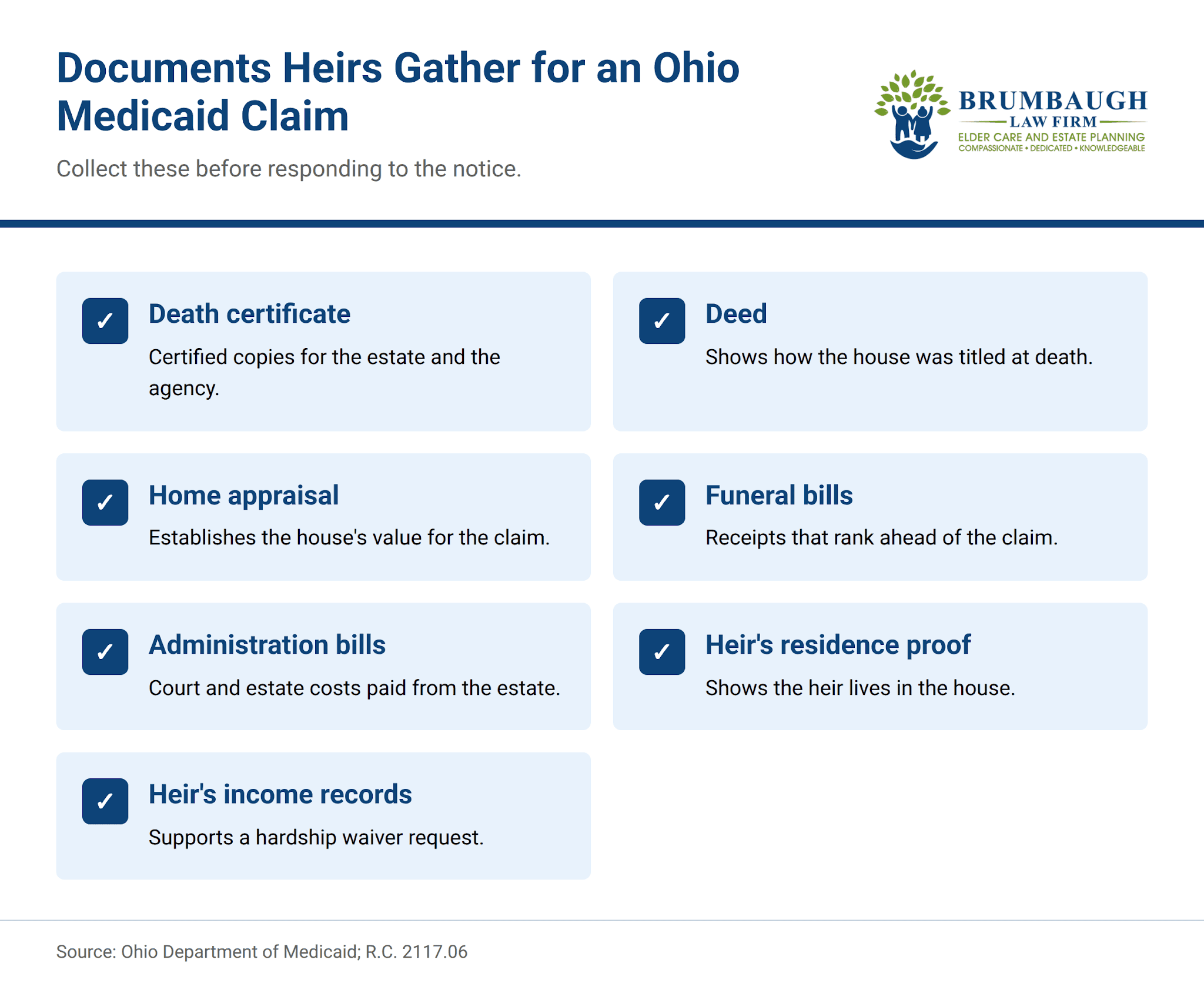
Figure 2: Gather the records first so a hardship request can be supported. Source: Ohio Department of Medicaid; R.C. 2117.06.
Frequently Asked Questions
Can Nursing Homes Take Beneficiary Life Insurance?
Generally no, because a named-beneficiary policy passes outside probate and the facility is not the beneficiary’s creditor. This is not a universal rule. Ohio’s broad estate definition makes each policy worth reviewing for Medicaid recovery.
How Much Savings Can I Keep?
The resource limit, the cap on countable assets for long-term care Medicaid, sets the amount. It changes and differs for married applicants. A Medicaid eligibility calculator can organize your numbers, and the Ohio Department of Medicaid publishes the current figure.
What If A Spouse Enters Care?
The spouse at home may keep the house and a protected share of income and assets under spousal protections. Eligibility is based on both spouses’ resources. A review of your household’s numbers shows what the spouse at home keeps.
Looking At Your Home And Medicaid Together
Start by reading the deed, any trust and recent statements side by side. Michael Brumbaugh and our Sandusky team have served Northern Ohio families since 2002.
We go through the documents with you, and the plan is signed, funded and reviewed as life changes. The choice is yours.
If you are still learning, see Upcoming Workshops. If you are ready to plan or already in a Medicaid crisis, bring the deed and recent statements, and we can talk through your home plan together.